Periods are a normal part of life for half the world’s population. Yet in many homes, especially in poor communities, it is still something people don’t talk about. And for many women and girls, a simple packet of sanitary pads is still something they cannot afford.
What the numbers say
According to India’s National Family Health Survey (NFHS-5), about half of young women aged 15 to 24 still use cloth during their periods. The gap between rich and poor is large: around 95% of young women from the richest homes use a hygienic method, compared with only about 54% from the poorest homes.
Cloth is not always unsafe, but when it is not washed with soap, dried properly in the sun and changed often, it can lead to infections. In crowded homes with little water and no private space, keeping cloth clean is very hard.
Why it matters so much
- Health: poor menstrual hygiene can cause infections and discomfort.
- Education: some girls miss school during their periods because they don’t have pads or a clean toilet.
- Dignity: no woman or girl should feel ashamed or afraid because of something completely natural.
What Feeding Universe does
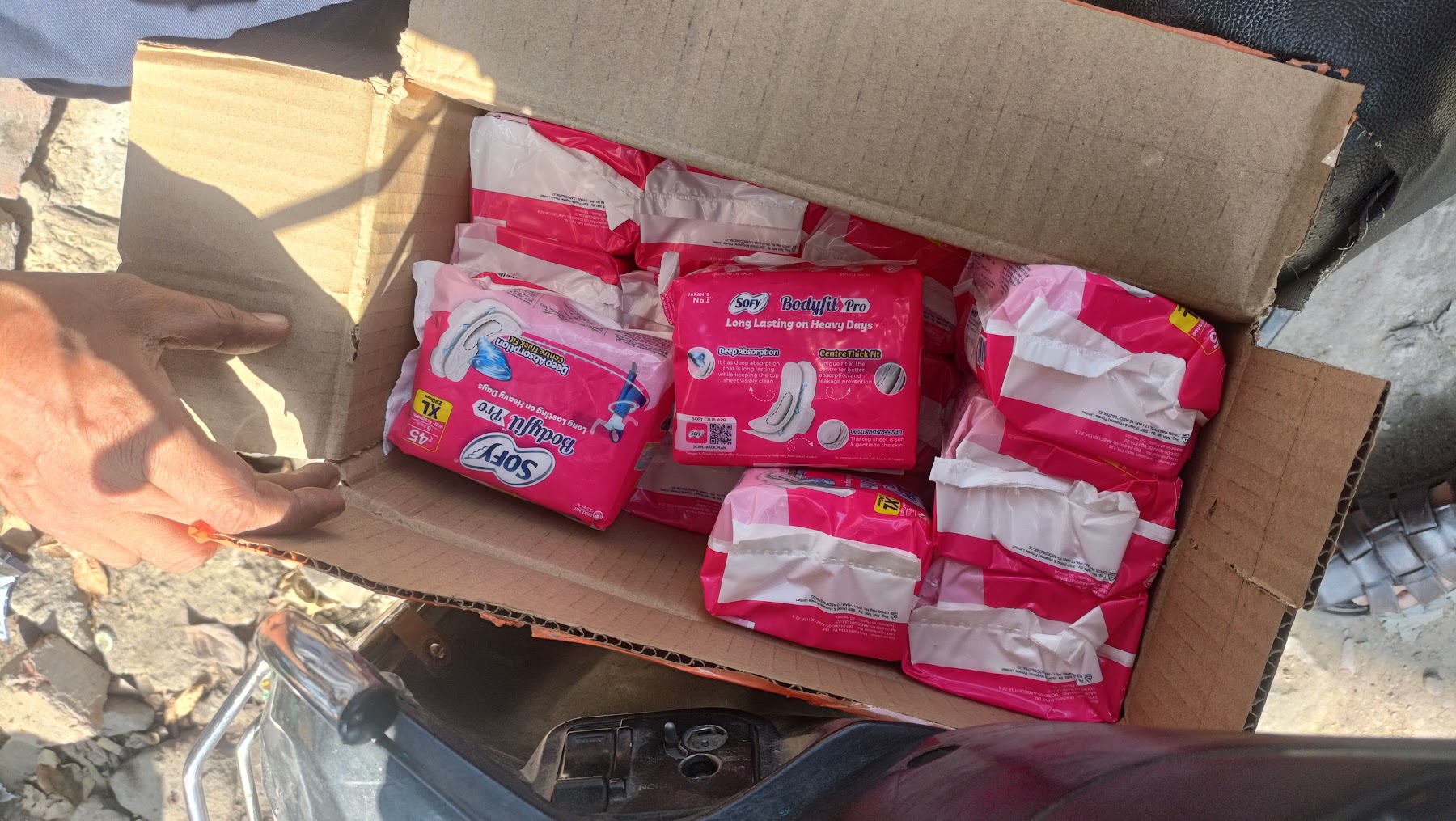
Through our Sanitary Pads Distribution Drives, our volunteers give pads to women and adolescent girls in underserved communities. Just as important, we create a comfortable space to talk openly about periods, ask questions and break the silence around this topic.
How you can help
- Donate pads or sponsor a pack for a woman or girl.
- Talk about it. Normalise conversations about periods at home, especially with young girls and boys.
- Volunteer at a drive, especially if you are a woman who can speak with girls about menstrual health.
Frequently asked questions
How often should a sanitary pad be changed?
Most health guides say every 4 to 6 hours, and sooner on heavy days. Wearing one pad for too long can cause rashes and infections.
Is it safe to use cloth during periods?
Cloth can be used if it is clean, washed with soap and dried fully in the sun. Damp or dirty cloth is what causes infections. Many women in bastis cannot dry cloth in the sun or in private, which is why pads are a safer choice for them.
Where can I buy low-cost sanitary pads in Delhi?
Jan Aushadhi Kendras (government medicine shops) sell Suvidha sanitary napkins at ₹1 per pad. There is one in most areas of Delhi.
How can I donate sanitary pads in Delhi?
You can give pad packets to Feeding Universe and we will hand them out at our next drive. See our sanitary pad distribution drive page or pledge pads on our Current Needs page.
Can men help with a sanitary pad drive?
Yes. Men can help collect, pack and carry pads, and talk to their own families about periods. The talks with girls and women at the drive are led by women volunteers.
Sources: National Family Health Survey (NFHS-5), as reported by ThePrint.
Be part of the next drive
Join us on a Sunday as a volunteer, or donate ration, clothes, stationery or toys. It is free to join, and volunteers get a certificate by email.